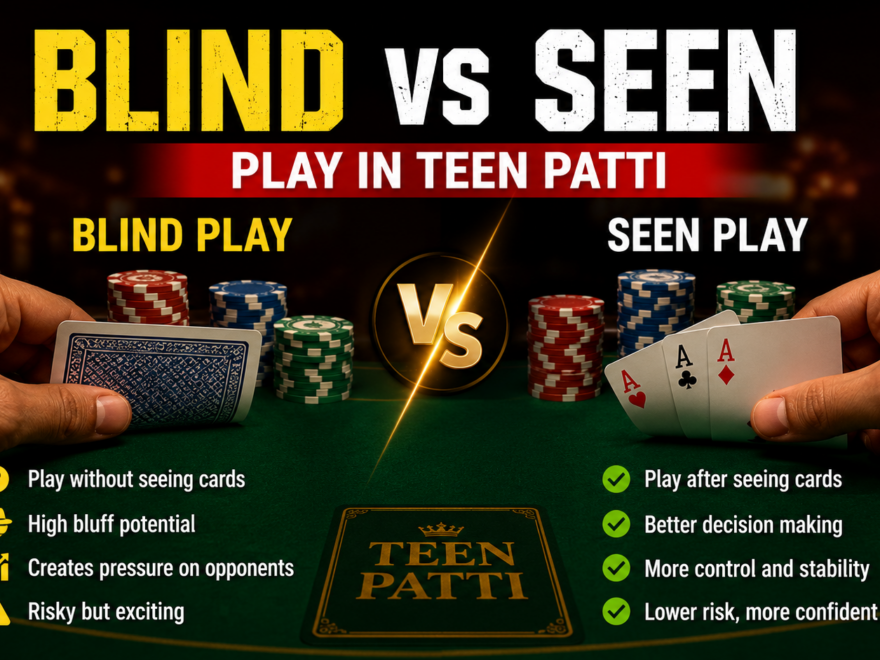
Teen Patti is one of the most exciting card games, combining luck, psychology, and smart decision-making. Every hand presents a new challenge, but one choice can significantly influence your gameplay—whether to play Blind or Seen. While both approaches have their own advantages, understanding when to use each strategy can improve your overall performance and help you make more informed decisions.
Many beginners assume Blind play is purely about luck, while Seen play is always the safer option. In reality, experienced players know that success comes from choosing the right approach based on the table dynamics, betting patterns, and your confidence in reading the game.
If you’re looking to improve your Teen Patti experience, understanding the difference between Blind and Seen play is the first step toward making smarter decisions.
What Is Blind Play in Teen Patti?
Blind play means participating in the game without looking at your cards. Since you have no information about your hand, every decision relies on confidence, observation, and calculated risk.
Blind players usually place smaller bets initially, but they can create uncertainty among opponents because nobody knows whether they’re holding a strong hand or simply bluffing.
Advantages of Blind Play
- Creates psychological pressure on opponents.
- Requires lower initial betting in many game formats.
- Makes your gameplay less predictable.
- Can force cautious players to fold.
Challenges of Blind Play
- You have no idea about your card strength.
- Easy to lose chips if you continue blindly for too long.
- Requires discipline and proper bankroll management.
Blind play works best when you understand betting patterns rather than relying on pure luck.
What Is Seen Play?
Seen play begins after you check your cards. Once you’ve looked at your hand, every betting decision becomes more informed.
Most new players prefer Seen play because it reduces uncertainty. Instead of guessing, you know whether your cards deserve aggressive betting or a quick fold.
Benefits of Seen Play
- Better decision-making based on card strength.
- Easier bankroll management.
- Reduced unnecessary risks.
- More control over betting strategy.
Limitations of Seen Play
- Betting amounts are generally higher than Blind.
- Opponents may predict your confidence based on your actions.
- Strong cards can sometimes encourage overconfidence.
Seen play rewards patience and disciplined betting rather than impulsive decisions.
Blind vs Seen: Key Differences
| Feature | Blind Play | Seen Play |
| Card Visibility | Hidden | Visible |
| Risk Level | High | Moderate |
| Decision Making | Based on psychology | Based on cards |
| Bluff Potential | Very High | Moderate |
| Suitable For | Experienced players | Beginners and experienced players |
| Betting Confidence | Psychological | Information-driven |
Neither approach is universally better. The strongest players know when to switch between both styles.
When Should You Choose Blind Play?
Blind play becomes effective under certain conditions.
1. Early in the Game
Starting Blind can make opponents uncertain about your strategy before you’ve revealed any patterns.
2. Against Conservative Players
Players who avoid unnecessary risks may fold more often against aggressive Blind betting.
3. To Build Table Pressure
A confident Blind player can influence the pace of the game and force others into difficult decisions.
However, Blind play should never become your default strategy. Staying Blind for too many rounds usually increases unnecessary losses.
When Is Seen Play the Better Option?
Seen play is generally the smarter choice in longer sessions.
Consider switching to Seen when:
- The betting amount has increased.
- You’re protecting your bankroll.
- You’ve noticed aggressive opponents.
- The game has become unpredictable.
Looking at your cards gives you valuable information that helps you make logical decisions instead of emotional ones.
The Psychology Behind Blind and Seen Play
Teen Patti isn’t only about cards—it’s also about reading people.
Blind players often appear fearless, which can intimidate opponents. However, experienced players know that constant Blind betting doesn’t always indicate a strong position.
Seen players, on the other hand, may unintentionally reveal confidence through faster calls or larger raises. Observing these subtle behaviors can help you make better decisions regardless of your own strategy.
The most successful players balance confidence with patience instead of relying on one style throughout the session.
Common Mistakes Players Make
Many players struggle because they repeat the same habits every game.
Some common mistakes include:
- Staying Blind after multiple losses.
- Playing every Seen hand aggressively.
- Ignoring betting patterns.
- Chasing losses with larger bets.
- Bluffing too frequently.
Avoiding these mistakes is often more valuable than learning complicated strategies.
Tips to Improve Your Teen Patti Strategy
Whether you prefer Blind or Seen play, these habits can improve your overall gameplay:
- Set a bankroll before starting.
- Avoid emotional betting after losing rounds.
- Observe opponents before making aggressive moves.
- Mix Blind and Seen strategies to stay unpredictable.
- Fold weak hands instead of chasing unlikely wins.
- Stay patient during long sessions.
If you’re interested in learning more about Teen Patti strategies, gameplay tips, and responsible gaming insights, explore the detailed resources available at Teen Patti strategy guides on CricBet99.
For a better understanding of Teen Patti’s official rules and hand rankings, you can also refer to the which provides useful background information for both beginners and experienced players.
Does One Strategy Guarantee Better Results?
The simple answer is no.
Teen Patti always involves an element of chance. Neither Blind nor Seen play can guarantee consistent wins because every hand is independent.
Your long-term performance depends more on:
- Decision-making
- Risk management
- Reading opponents
- Emotional control
- Knowing when to fold
Players who combine these skills generally perform better than those who rely solely on luck.
FAQs
Is Blind play better than Seen play in Teen Patti?
Not necessarily. Blind play creates uncertainty and offers bluffing opportunities, while Seen play provides more information for making informed betting decisions. The better choice depends on the game situation.
Should beginners play Blind?
Beginners usually benefit more from Seen play because it helps them understand hand strength and betting decisions before experimenting with Blind strategies.
Can I switch from Blind to Seen during a game?
Yes. In most Teen Patti variations, players can look at their cards during the game and continue playing as a Seen player according to the platform’s rules.
Does Blind play increase my chances of winning?
No. Playing Blind does not change the probability of receiving good cards. It only changes how you make betting decisions.
What is the biggest mistake in Teen Patti?
One of the most common mistakes is continuing to bet aggressively after consecutive losses instead of managing your bankroll and folding when necessary.
Final Thought
Blind and Seen play each bring a unique dimension to Teen Patti. Blind play adds unpredictability and psychological pressure, while Seen play offers greater control through informed decisions. Instead of choosing one strategy exclusively, successful players adapt based on the table, their opponents, and the flow of the game.
The key is not to chase every hand but to stay disciplined, observe carefully, and make decisions with a clear plan. Over time, this balanced approach can make your Teen Patti sessions more enjoyable and strategically rewarding while helping you develop a deeper understanding of the game.