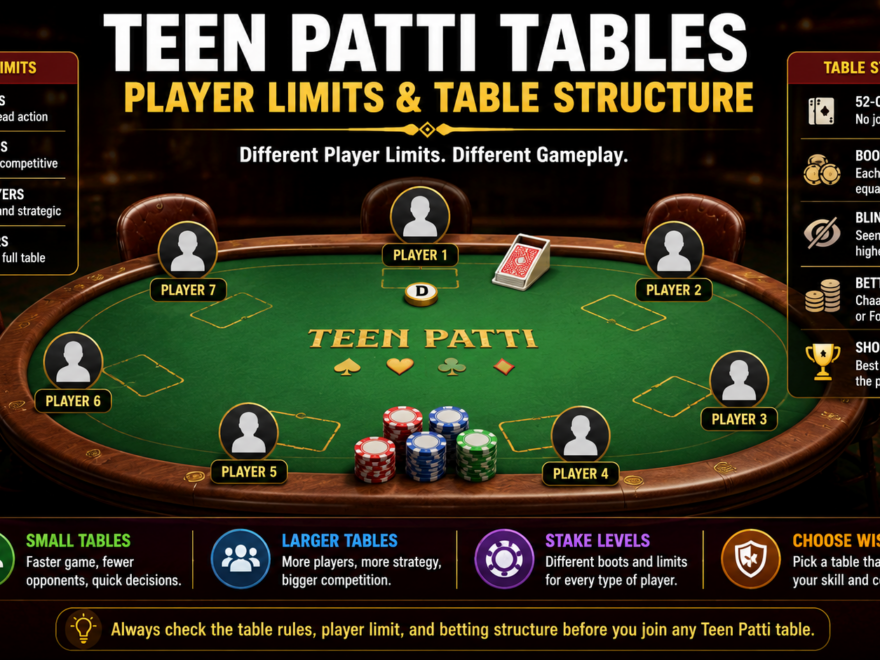
Teen Patti is easy to learn, but the way a table is structured can change the pace and feel of every round. The number of players, minimum boot, betting limits, and table rules all influence how quickly the pot grows and how much pressure players face.
For anyone exploring online Teen Patti, understanding Teen Patti table structure is useful before joining a table. Different platforms may offer tables for smaller groups, larger groups, limited stakes, or higher betting levels. The exact setup can vary, so checking the rules of the individual table is always important.
What Is a Teen Patti Table?
A Teen Patti table is the playing environment where players are seated, receive three cards, and participate in the betting round. Traditionally, Teen Patti uses a standard 52-card deck, with each player receiving three cards face down. Players then decide whether to play blind or seen and take turns betting.
Traditional rules can support different numbers of players, with four to seven often considered a practical range for a live game. Online platforms may use their own player limits depending on the table design and game format.
The table normally has several important elements:
- Player seats
- Dealer position
- Boot or starting stake
- Current betting amount
- Player balance or chips
- Blind and seen status
- Pot or total stake
- Fold, call, raise, and show options
This structure keeps the action organized even when several players are involved.
How Player Limits Affect a Teen Patti Table
The number of players has a direct effect on the pace and strategy of a Teen Patti game.
2-Player Tables
A two-player format is relatively straightforward because there are only two hands competing for the pot. There is less uncertainty about what other players may hold, and the round can move quickly.
However, heads-up play can create more frequent confrontations because there are fewer opportunities for players to fold and wait for another hand.
3-Player Tables
Three-player tables provide a balance between speed and competition. Each player has more information to consider than in a heads-up game, but the table remains small enough for the action to move quickly.
A player may also need to think about how an opponent’s betting behavior changes when another active player is still involved.
4-6 Player Tables
Tables with four to six players are common formats for multiplayer Teen Patti. With more active seats, there are more possible hands and more decisions before a round reaches its final stage.
The larger table can also make Teen Patti betting strategy more interesting because a player needs to consider multiple opponents rather than focusing on a single hand.
Some online Teen Patti platforms set their own maximum seat limits. For example, one Teen Patti platform states that its tables allow a maximum of five players, while also allowing players to select a buy-in between a minimum and maximum amount.
This shows why players should not assume that every online table follows exactly the same structure.
Limited-Stake and Higher-Stake Tables
Player limits are only one part of table structure. Stake limits can be equally important.
A limited-stake Teen Patti table places restrictions on how large the betting can become. This can include a maximum chaal, a maximum number of blind rounds, or a pot limit.
For example, some established online Teen Patti formats use different table levels with different boot amounts and maximum pot limits. Octro’s Teen Patti rules describe limited-stake tables where both the boot and maximum pot can increase as players move to higher table levels.
This type of structure helps separate lower-stake games from tables designed for players who are comfortable with larger betting amounts.
Why the Boot Amount Matters
The boot is the initial amount placed into the pot before the betting begins. Every player normally contributes the agreed boot amount, creating a starting pot.
For example, if six players join a table with a 10-chip boot, the initial pot would contain 60 chips before additional betting begins.
The boot therefore influences the overall pace of the game. A smaller boot can make a table more approachable, while a higher boot means players are committing more from the beginning.
Blind and Seen Players
Another important part of the table structure is the difference between blind and seen play.
A blind player has not looked at their three cards, while a seen player has checked their cards before betting. Traditional Teen Patti rules generally require seen players to wager more than blind players. Pagat’s detailed Teen Patti rules explain the commonly used relationship between current stakes and blind or seen betting.
This difference adds another layer to table dynamics. A blind player may continue without knowing the strength of their hand, while a seen player has more information but normally faces a higher betting requirement.
Table Limits Can Change the Game Flow
A smaller table generally produces faster decisions because fewer players are involved. Larger tables can create more rounds of betting and give players more opportunities to observe opponents.
The table’s betting limits also influence how quickly the pot can increase. A fixed or limited structure can keep betting under control, while a higher or unlimited format can create much larger swings.
For beginners, it can therefore make sense to understand the table’s:
- Maximum number of players
- Minimum and maximum buy-in
- Boot amount
- Betting limits
- Pot limit
- Blind and seen rules
- Show and side-show conditions
Before joining an online game, players looking for a Teen Patti table should review these details rather than selecting a table based only on its displayed stake.
Choosing the Right Teen Patti Table
The best table depends on the player’s familiarity with the game and the rules being used. Someone learning the basics may prefer a smaller, lower-stake table where the betting structure is easy to understand.
More experienced players may prefer tables with more seats, larger limits, or specific variations.
If you are exploring online Teen Patti platforms, you can also take a look at Cricbet99 to learn more about its available gaming content and table options. Always check the platform’s current rules, eligibility requirements, and applicable local laws before participating.
It is also worth remembering that Teen Patti rules are not completely identical across every platform. Variations can change player limits, betting caps, hand rules, and other parts of gameplay.
FAQs About Teen Patti Tables
How many players can play Teen Patti at one table?
The number varies by table and platform. Traditional versions can accommodate several players, while online platforms may impose specific limits such as five or six seats.
What is the boot amount in Teen Patti?
The boot is the starting stake contributed to the pot before the cards are dealt. The exact amount depends on the table.
What is the difference between blind and seen?
A blind player has not looked at their cards. A seen player has looked at their cards before continuing with the betting.
Do all Teen Patti tables have the same betting limits?
No. Online platforms can use different minimum bets, maximum bets, pot limits, and table structures. Players should check the rules before joining.
Is a larger Teen Patti table better?
Not necessarily. Larger tables create more competition and can make rounds more complex, while smaller tables usually move faster. The right choice depends on the player’s experience and preferred format.
Final Thought
Teen Patti table structure is about more than simply counting seats. Player limits, boot amounts, betting caps, blind and seen rules, buy-in ranges, and pot limits all work together to determine how a game develops.
Understanding these elements before joining a table makes the experience easier to follow and helps players choose a format that matches their familiarity with the game. Since online platforms can use different rules and limits, checking the individual table conditions should always be part of the process.