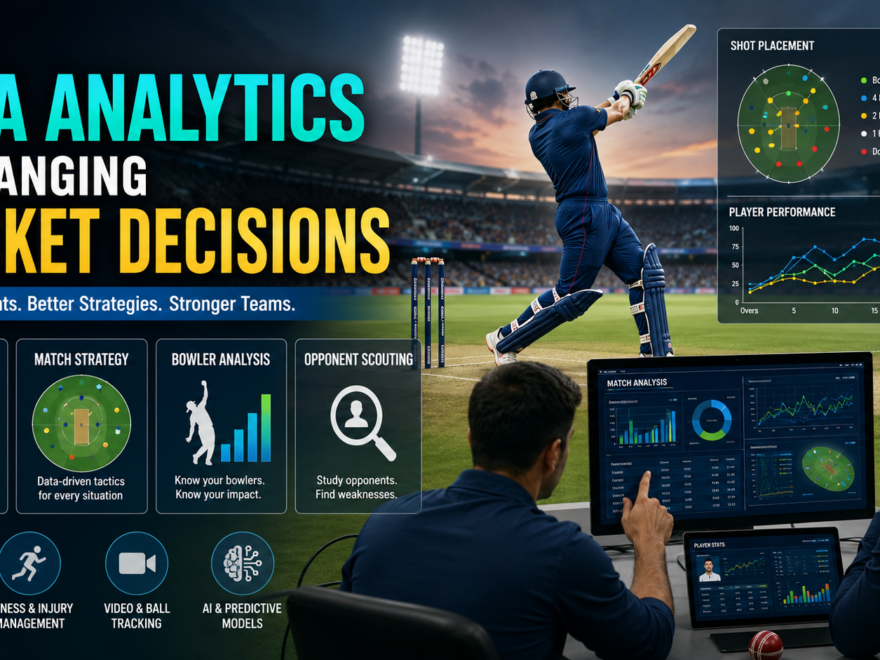
How Data Analytics Is Changing Cricket Decisions
Cricket has always been a game of skill, experience, and tactical thinking. For decades, captains relied on instinct, coaches trusted observation, and selectors made decisions based on traditional statistics. Today, however, the sport is experiencing a major transformation. Data analytics has become one of the most powerful tools in modern cricket, helping teams make smarter decisions both on and off the field.
From player selection and match preparation to injury prevention and real-time strategy adjustments, data-driven insights are influencing almost every aspect of the game. As technology continues to evolve, analytics is no longer a luxury for elite teams—it is becoming a necessity.
The Rise of Data Analytics in Cricket
Cricket has always generated statistics, but modern analytics goes far beyond batting averages and bowling economy rates. Advanced tracking systems now collect ball-by-ball information, including speed, line, length, swing, spin, shot placement, and player movement. Wearable technology also provides fitness and workload data that can be analyzed in real time.
This enormous amount of information allows teams to identify patterns that would otherwise be difficult to detect. Analysts use specialized software and machine learning models to turn raw data into actionable insights that coaches and captains can use during matches.
Smarter Team Selection
One of the biggest impacts of analytics is on team selection. Instead of relying solely on reputation or recent performances, teams can evaluate players based on specific match conditions and opposition strengths.
For example, analysts can determine:
- Which batter performs best against left-arm pace.
- Which bowler is most effective on slow pitches.
- How a player performs under pressure situations.
- Historical records at a particular venue.
This approach helps selectors choose players who are most likely to succeed in specific conditions rather than relying on generalized statistics. Research in cricket analytics has also shown that context-based performance models can evaluate player contributions more accurately than traditional metrics.
Match Strategy and Tactical Planning
Modern cricket teams spend countless hours analyzing opposition data before a series or tournament. Detailed reports help teams understand strengths, weaknesses, and scoring patterns of opponents.
Analytics helps answer questions such as:
- Where does a batter score most of their runs?
- Which delivery type causes the most problems?
- When should a particular bowler be introduced?
- What field placements are most effective?
Many franchise teams in leagues such as the IPL use these insights to create highly targeted game plans. Captains can adjust tactics based on data rather than relying solely on intuition.
Improving Batting Performance
Batters now have access to detailed information about their own performance. Video analysis combined with statistical data helps identify technical weaknesses and scoring opportunities.
For instance, a player may discover that:
- Their strike rate drops significantly against short-pitched bowling.
- They score most effectively in a particular area of the field.
- Certain bowlers consistently restrict their scoring.
Using this information, players can develop more focused training plans and improve specific aspects of their game. Modern cricket academies increasingly use video analysis and performance tracking to accelerate player development.
Data-Driven Bowling Decisions
Analytics has transformed bowling strategies as well. Teams can evaluate bowlers based on match situations, pitch conditions, and batter matchups.
Bowling analysts often examine:
- Economy rates in different phases.
- Success against specific batters.
- Preferred lengths and lines.
- Performance under pressure.
This information helps captains make informed decisions about bowling changes and field settings. Data-driven planning has become particularly valuable in T20 cricket, where every over can significantly impact the result.
The Role of Technology
Several technologies have contributed to cricket’s analytics revolution.
Hawk-Eye
Hawk-Eye tracks ball movement and provides accurate ball-tracking data. It is widely used in the Decision Review System (DRS) and also helps teams analyze bowling patterns.
Wearable Technology
GPS trackers, smart sensors, and fitness monitoring devices collect data on player workloads, movement, and physical condition. This information helps teams manage player fitness and reduce injury risks.
Video Analysis Software
Modern coaching systems use video analysis to break down batting techniques, bowling actions, and fielding performance. This allows players to make technical adjustments based on objective evidence.
Injury Prevention and Workload Management
Injury management has become a major focus in professional cricket. Fast bowlers, in particular, face significant physical demands throughout long seasons.
Data analytics helps teams monitor:
- Bowling workloads.
- Training intensity.
- Recovery periods.
- Biomechanical movements.
By tracking these factors, support staff can identify early signs of fatigue and reduce injury risks. This proactive approach helps players maintain peak performance over longer periods.
Balancing Data and Human Judgment
While analytics provides valuable insights, numbers alone cannot win matches. Many experts believe that data works best when combined with coaching expertise, player experience, and situational awareness.
A statistical advantage may not always account for changing pitch conditions, player confidence, or unique match situations. Successful teams use analytics as a decision-support tool rather than treating it as the only source of truth.
This balance between data and human judgment is likely to define the future of cricket strategy.
The Future of Cricket Analytics
Artificial intelligence and machine learning are expected to play an even bigger role in cricket. Future systems may predict match outcomes more accurately, identify tactical opportunities in real time, and create highly personalized training programs.
As data collection becomes more sophisticated, teams will gain deeper insights into player performance, opposition behavior, and match conditions. The competitive edge provided by analytics will continue to grow, making data an essential part of modern cricket.
For readers interested in sports analytics and performance science, resources from ESPNcricinfo and ICC Cricket regularly publish analysis on cricket trends, player statistics, and tactical developments.
Final Thoughts
Data analytics has fundamentally changed how cricket decisions are made. From team selection and tactical planning to player development and injury prevention, analytics is helping teams make more informed choices than ever before.
While instinct and experience remain important, the modern game increasingly rewards teams that can combine traditional cricket knowledge with data-driven insights. As technology continues to advance, analytics will play an even greater role in shaping the future of cricket, giving players, coaches, and captains new ways to gain a competitive advantage.
FAQs
What is data analytics in cricket?
Data analytics in cricket involves collecting and analyzing performance data to improve decision-making related to team selection, tactics, training, and player development.
How do cricket teams use analytics?
Teams use analytics to study player performance, analyze opponents, plan match strategies, optimize field placements, and manage player workloads.
What technologies are used in cricket analytics?
Popular technologies include Hawk-Eye, wearable fitness trackers, GPS systems, video analysis software, and AI-based performance models.
Does analytics replace the role of coaches and captains?
No. Analytics supports decision-making, but coaches and captains still rely on experience, match awareness, and leadership to make final decisions.
Why is data analytics important in T20 cricket?
T20 matches are fast-paced, and small tactical advantages can make a significant difference. Analytics helps teams make quick, informed decisions that can influence match outcomes.