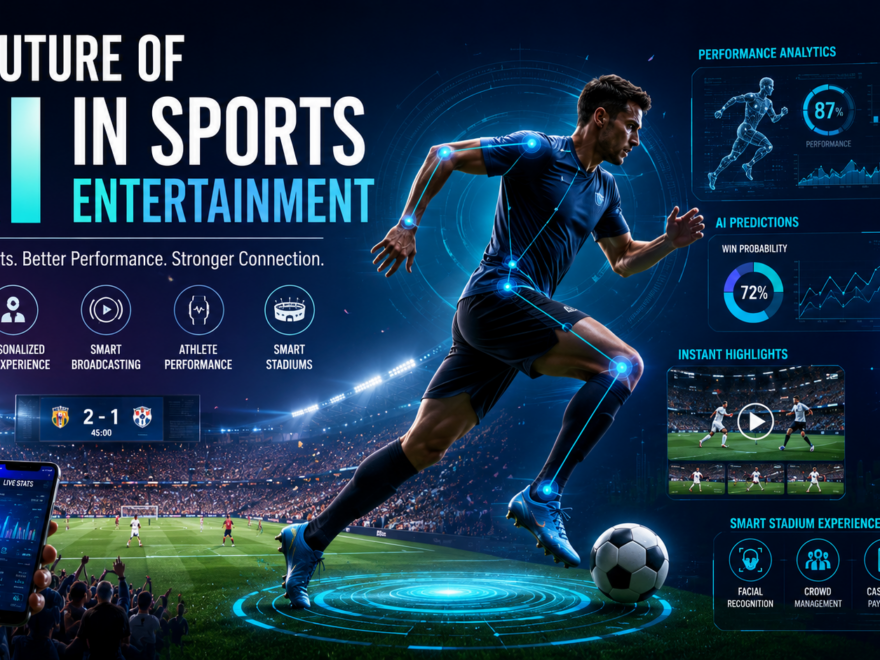
The Future of AI in Sports Entertainment
Artificial Intelligence (AI) is rapidly reshaping the sports entertainment industry. From real-time analytics and performance tracking to personalized fan experiences and automated broadcasting, AI is no longer just a support tool—it is becoming the backbone of modern sports innovation. The future of sports is not only about athletes and teams but also about intelligent systems that enhance every layer of the experience.
Based on insights from leading technology platforms such as Shieldbase AI Blog, G42 AI Publications, and IBM Sports AI Insights, it is clear that AI is driving a massive shift in how sports are played, analyzed, and consumed.
AI in Sports Analytics: Smarter Decisions, Better Performance
One of the most powerful applications of AI in sports is performance analytics. AI systems can process millions of data points from matches, training sessions, and wearable devices to deliver actionable insights.
Coaches and analysts now rely on AI to:
- Track player movement and stamina
- Predict injury risks before they happen
- Analyze opponent strategies in real time
- Improve training efficiency through data-driven feedback
Platforms like IBM’s AI solutions highlight how startups and teams can now integrate advanced analytics into their sports systems, making decision-making faster and more accurate.
This shift is turning sports into a highly data-driven industry where every movement on the field is measurable and improvable.
Enhanced Fan Engagement Through AI
Fan engagement is another area where AI is making a huge impact. Modern sports audiences expect personalized, interactive experiences, and AI is delivering exactly that.
AI is being used to:
- Create personalized highlight reels for fans
- Offer real-time match insights and predictions
- Power AI-driven chatbots for live updates
- Deliver customized content based on user behavior
According to G42 AI Sports Future Report, AI is transforming passive viewers into active participants by making sports consumption more immersive and personalized.
This means fans no longer just watch games—they experience them in real time with deeper insights and engagement.
AI in Broadcasting and Media Production
Sports broadcasting is evolving quickly with AI-powered automation. Traditional production requires large teams, but AI is now helping streamline the process.
Key innovations include:
- Automated camera tracking systems
- AI-generated match highlights
- Real-time commentary assistance
- Smart editing for instant content creation
Companies like IBM are exploring how AI can reduce production costs while increasing content output, allowing broadcasters to deliver faster and more engaging coverage.
This is especially important in today’s digital era, where fans expect instant updates across multiple platforms.
AI in Sports Betting and Predictive Modeling
Predictive analytics is becoming a major trend in sports entertainment. AI models can analyze historical data, team performance, and real-time conditions to predict match outcomes with higher accuracy.
While this technology is widely used in fantasy sports and analytics platforms, it is also being integrated into sports journalism and fan prediction tools.
However, ethical use of AI in predictions remains important. Transparency and data accuracy are essential to ensure fair usage across the industry.
Wearable Technology and Athlete Monitoring
Wearable devices powered by AI are helping athletes optimize their performance like never before. These devices collect real-time biometric data such as:
- Heart rate and oxygen levels
- Muscle fatigue
- Speed and acceleration
- Recovery time
AI then analyzes this data to provide personalized training plans and recovery strategies. This reduces injury risks and extends athlete performance longevity.
Companies like NVIDIA are also contributing to AI advancements in sports computing and real-time data processing NVIDIA AI Platform.
The Role of AI in Stadium Experience
AI is not limited to digital platforms—it is also improving in-stadium experiences. Smart stadiums are using AI for:
- Crowd management and security
- Smart ticketing systems
- Personalized seat services
- Real-time navigation and assistance
These innovations are making live sports events more efficient, safe, and enjoyable for spectators.
Challenges of AI in Sports Entertainment
Despite its benefits, AI also brings challenges:
- Data privacy concerns
- High implementation costs
- Dependence on accurate data input
- Risk of over-automation in decision-making
Sports organizations must balance innovation with responsibility to ensure AI enhances rather than replaces human expertise.
Future Scope of AI in Sports
The future of AI in sports entertainment looks highly promising. In the coming years, we can expect:
- Fully AI-powered coaching assistants
- Virtual reality (VR) and augmented reality (AR) fan experiences
- Hyper-personalized sports content
- Fully automated sports broadcasting systems
- Advanced injury prediction systems with near-perfect accuracy
AI will continue to blur the line between physical and digital sports experiences, creating a more connected global sports ecosystem.
FAQs
1. How is AI used in sports today?
AI is used in performance analysis, injury prediction, fan engagement, broadcasting automation, and real-time match insights.
2. Will AI replace coaches or players?
No, AI will assist coaches and players by providing data-driven insights, but human decision-making will remain essential.
3. How does AI improve fan experience?
AI personalizes content, creates highlight reels, offers predictions, and enhances live match engagement.
4. What is the biggest benefit of AI in sports?
The biggest benefit is improved performance optimization through data-driven decision-making.
5. Are smart stadiums already using AI?
Yes, many modern stadiums are using AI for security, ticketing, crowd control, and fan services.
Final Thought
AI is no longer a future concept in sports entertainment—it is already deeply integrated into the industry. From enhancing athlete performance to transforming fan engagement and revolutionizing broadcasting, AI is redefining how sports are experienced worldwide. As technology continues to evolve, the sports industry will become smarter, faster, and more interactive, creating opportunities that were unimaginable just a few years ago.