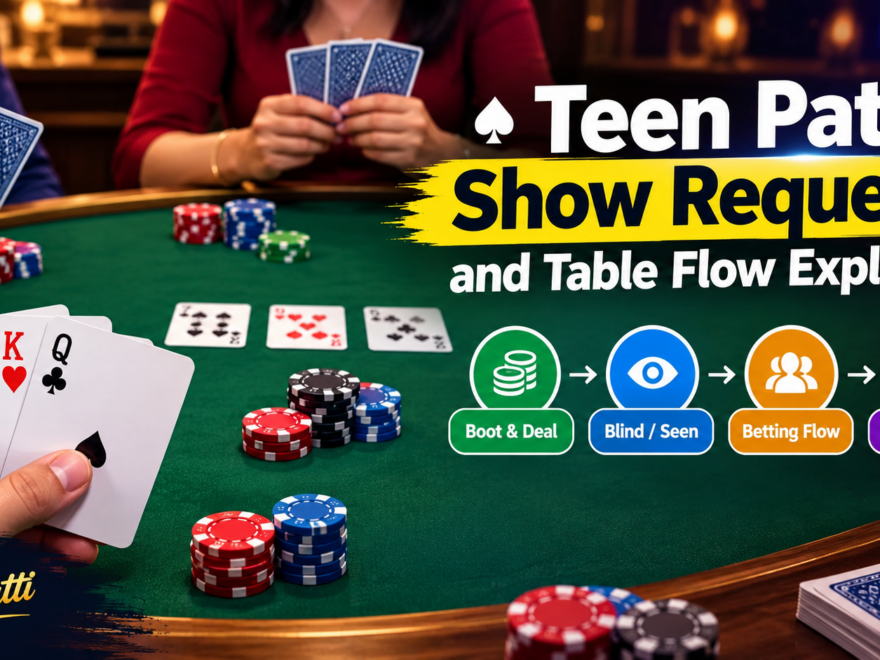
Teen Patti is a fast-moving card game where every decision can affect the flow of the table. Players often understand basic actions such as Blind, Seen, Chaal, and Pack, but confusion can arise when the game reaches the final stage and a Show request becomes possible.
Understanding how a Teen Patti Show works is important because the Show is usually the action that brings a hand to its final result. However, a Show does not happen randomly at any point in the game. It follows the table flow, player status, betting sequence, and the rules set by the particular Teen Patti table or platform.
This guide explains Teen Patti Show requests in simple language, including how the table moves from the initial deal to the final comparison of cards.
What Is a Show Request in Teen Patti?
A Show is the final comparison of cards between the remaining eligible players. In a standard Teen Patti round, betting continues until players Pack or continue with the required stake. When only two active players remain, the game may reach the stage where a Show can determine the winner.
During a Show, the remaining hands are revealed and compared according to the Teen Patti hand-ranking system. The stronger hand wins the pot, subject to the specific rules of the table. Standard Teen Patti gameplay generally moves toward either one player remaining after others fold or a final comparison between the last two active hands.
The key point for beginners is simple: a Show is part of the final table flow, not an action normally available whenever a player wants to see another player’s cards.
Understanding the Basic Teen Patti Table Flow
Before understanding a Show request, it helps to understand how a normal round moves.
1. The Boot Is Placed
The round generally begins with players contributing the agreed boot amount to the pot. This creates the starting value of the round before cards are dealt.
2. Three Cards Are Dealt
Each active player receives three cards face down. Players can then decide whether to continue without looking at their cards or view them before making future decisions.
3. Players Choose Blind or Seen Play
A Blind player continues without viewing the cards.
A Seen player has looked at the cards and continues according to the betting rules for seen play.
This distinction is important because many Teen Patti tables use different stake requirements for Blind and Seen players. The exact limits can vary depending on the platform or table rules.
4. The Betting Flow Continues
As the turn moves around the table, players generally have options such as:
- Continue with Chaal
- Increase the stake where permitted
- Pack and leave the hand
- Request a Side Show when eligible
- Request a Show when the final table conditions allow
Each action changes the situation at the table. A player who Packs leaves the current hand, while active players continue until the hand reaches its final stage.
When Can a Teen Patti Show Request Happen?
In standard Teen Patti flow, a Show is generally associated with the stage when only two players remain active.
For example, imagine a table that begins with five players.
- Player 1 continues
- Player 2 Packs
- Player 3 continues
- Player 4 Packs
- Player 5 continues
As more players Pack, the table gradually becomes smaller. Once only two players remain, the game reaches its final decision stage, where the applicable Show rules become important.
Traditional Teen Patti rules generally treat the Show as a final comparison between the remaining two hands. However, the exact cost, eligibility, and treatment of Blind and Seen players can differ across tables and apps.
This is why players should always check the rules displayed by the particular platform before joining a table.
How the Show Fits Into the Final Table Flow
The final table flow can be understood in four simple steps.
Step 1: Players Continue or Pack
The hand starts with several active players. As betting continues, some players may decide their cards are not worth continuing with and choose to Pack.
Step 2: The Number of Active Players Reduces
Every Pack changes the table situation. Once multiple players leave the hand, the remaining players become more important in determining how the round will finish.
Step 3: Two Players Remain
When the table reaches two active players, the final Show rules can come into play.
At this stage, the players’ Blind or Seen status may affect which actions are permitted. Some Teen Patti formats apply different Show conditions depending on whether one or both remaining players have viewed their cards.
Step 4: Cards Are Compared
Once a valid Show is initiated according to the table rules, the remaining cards are revealed and compared.
The hand rankings generally move from:
- Trail or Three of a Kind
- Pure Sequence
- Sequence
- Color
- Pair
- High Card
The stronger eligible hand wins the pot, while tie-handling rules may depend on the table format.
Show vs Side Show: Understanding the Difference
One of the biggest mistakes beginners make is confusing a Show with a Side Show.
A Show is generally the final action that settles the hand.
A Side Show is a separate comparison request that may be available earlier in the game between eligible Seen players.
In a Side Show, two players may compare their cards privately if the request is accepted under the applicable rules. The weaker hand normally leaves the round, while the stronger hand continues.
A Side Show does not necessarily end the entire table. Other active players may still remain in the hand.
A Show, on the other hand, is connected to the final resolution of the remaining players.
Understanding this difference makes the overall Teen Patti table flow much easier to follow.
Why Player Status Matters During a Show
Blind and Seen status can affect how the final stage works.
A Blind player has not viewed the cards, while a Seen player has already checked them. Traditional Teen Patti rules and online formats may apply different requirements to these two positions.
For example, some rule sets allow different Show options or costs depending on whether both players are Seen or one player is still Blind. Because these mechanics are not always identical across platforms, players should avoid assuming that every Teen Patti table follows the same format.
The safest approach is to understand the table interface and read the applicable game rules before playing.
Common Mistakes Players Make With Show Requests
Requesting a Show Too Early
A common misunderstanding is assuming that a player can request a Show while several players are still active. In standard table flow, the Show is generally linked to the final stage involving the remaining two players.
Confusing Show With Side Show
A Side Show is not the same as a final Show. Players should understand both actions separately to avoid confusion during live gameplay.
Ignoring Blind and Seen Status
A player’s card status can affect available actions. Looking at the cards changes the player from Blind to Seen, and that may change the betting or Show options available under the table rules.
Forgetting Table-Specific Rules
Different apps, online tables, and local game formats may have their own variations. Always check the displayed rules before making assumptions about Show eligibility or stake requirements.
Understanding Teen Patti Gameplay on Online Platforms
Online card platforms make table flow easier to follow by displaying available actions directly during a player’s turn. However, understanding the meaning behind those actions is still useful, especially for beginners.
Players looking for information about online cricket, sports, and gaming-related access options may also come across a Cricbet99 ID Provider while researching different online gaming platforms and services.
Before choosing any online platform, it is important to understand the rules, available features, account conditions, and local laws that may apply. Responsible participation and careful decision-making should always come before chasing quick results.
For additional background on the traditional structure and rules of Teen Patti, readers can also refer to Pagat’s Teen Patti rules guide, which explains the game flow, betting stages, shows, and card comparisons.
FAQs About Teen Patti Show Requests
What is a Show in Teen Patti?
A Show is the final comparison of eligible remaining hands. The cards are revealed and compared to determine the winner according to the table’s hand-ranking rules.
When can a Show request be made?
In standard Teen Patti table flow, a Show generally becomes relevant when only two players remain active in the hand.
Is a Show and Side Show the same thing?
No. A Show is generally used to settle the final hand, while a Side Show is a separate comparison request that may occur earlier between eligible players.
Can Teen Patti Show rules vary between platforms?
Yes. Show eligibility, stake requirements, Blind and Seen conditions, and tie rules can vary between tables, apps, and game formats.
What happens after a valid Show request?
The remaining eligible cards are revealed and compared. The winning hand receives the pot according to the applicable hand rankings and table rules.
Why should beginners understand table flow?
Understanding table flow helps players know when actions such as Chaal, Pack, Side Show, and Show may become available. It also reduces confusion during fast-moving rounds.
Final Thought
Understanding Teen Patti Show requests becomes much easier once you understand the complete table flow. The game starts with the boot and card deal, moves through Blind or Seen decisions, continues with betting and Pack actions, and eventually reaches a final outcome when one player remains or the last eligible hands are compared.
The most important thing to remember is that a Show is not an isolated action. It is part of the larger Teen Patti table sequence. By understanding how players move through each stage, beginners can follow the game more confidently and avoid confusing a Show with a Side Show or other table actions.
Since rules can vary between platforms and formats, always check the specific table rules before playing, particularly when real-money stakes are involved. Teen Patti is easier to understand when players focus first on the table flow, player status, and hand rankings before making any final Show decision.